Water in the soil never stops pushing against your foundation. Basement wall waterproofing stops that water two ways. One approach blocks moisture before it reaches the concrete. The other manages water that has already entered the home. At Paul’s Basement Waterproofing, we match the waterproofing method to the problem in homes across Windsor, Essex County, and Chatham-Kent. The right choice depends on how water enters, the slope of your yard, and the condition of your basement walls.
This guide explains interior and exterior wall basement waterproofing, what each costs, and how to pick the best method for your home.
Why Water Enters Through Basement Walls
Groundwater builds pressure against your foundation. This force, called hydrostatic pressure, pushes water through cracks, joints, and porous concrete. Heavy rain, snowmelt, and poor drainage raise the groundwater level around your home and force moisture inside. Older houses face more risk because the walls have settled and developed hairline cracks over time. Left alone, a wet basement leads to water damage, mold, and structural damage.
A few clear signs tell you the basement walls need attention:
- Damp patches, white chalky stains (efflorescence), or water along the wall base
- Cracks that widen, pooling water on the floor, or a musty smell after heavy rain
When you spot these signs, fast action keeps a small leak from turning into costly structural damage.
Exterior Waterproofing: Stop Water From Entering
Exterior waterproofing is the most complete waterproofing method because it stops water before it reaches the foundation. This work seals the foundation from the outside of your home. It takes more time and costs more, but it solves water intrusion at the source.
Excavation and Wall Repair
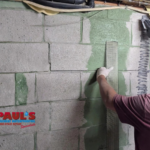
Our crew performs excavation around the foundation to expose the concrete. We clean the wall, then patch cracks and voids with hydraulic cement. We handle any structural concern or foundation repair before the next layer goes on. This step gives the membrane a sound surface to bond to.
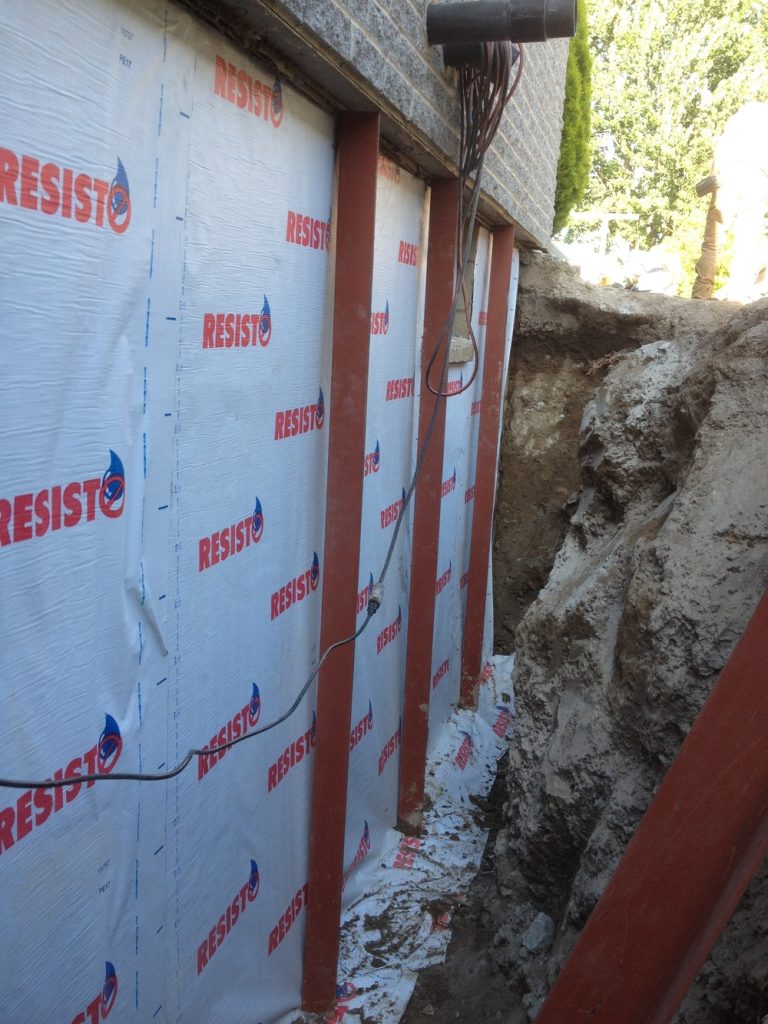
Waterproof Membranes and Drainage Boards
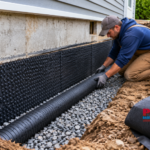
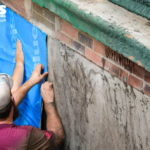
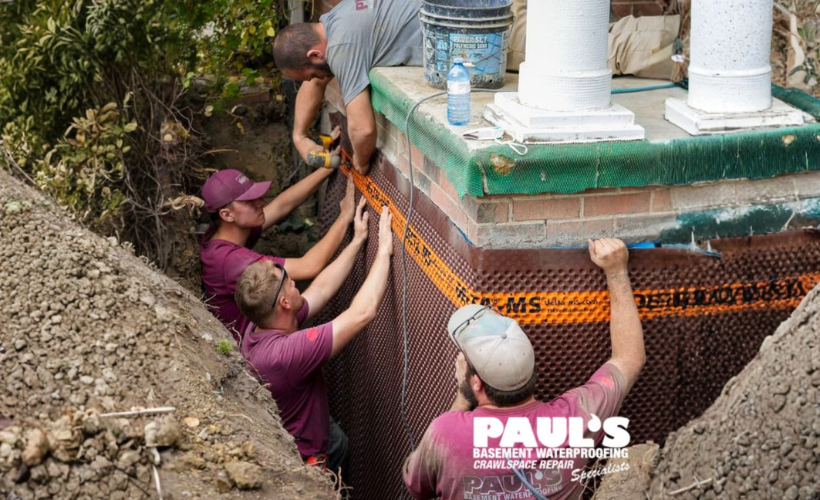
Once the wall is ready, we apply a heavy rubberized coating or a waterproof membrane across the exterior surface. This barrier seals the concrete so water cannot seep into the basement. Next, we install dimpled drainage boards over the membrane. These boards relieve hydrostatic pressure and guide moisture down toward the drain.
Weeping Tile and French Drain
A perforated weeping tile, or exterior French drain, sits at the footing level. It collects groundwater and carries water away from your home. We backfill the trench with porous gravel and topsoil so water drains freely instead of pressing against the wall. Exterior systems built this way prevent water from entering your basement for decades.
Interior Waterproofing: Manage Water Inside
Interior waterproofing is generally less expensive and less disruptive than excavation. Many homeowners choose interior methods for finished spaces or when access around the foundation is tight. Interior work focuses on managing water that has already entered rather than blocking it from the outside.
Crack Repair and Hydraulic Cement
Before any sealant goes on, we fill voids and the joint where the wall meets the floor. We use rapid-setting hydraulic cement, which expands as it cures and blocks active leaks. This stops water at the most common entry point inside the wall.
Masonry Waterproofing Coatings
Thick masonry coatings seal the pores in concrete and block water vapor. These waterproofing solutions form a flexible membrane that waterproofs basement walls from the inside. They suit walls with light moisture and minor seepage.
Interior Drainage Systems and Sump Pumps
When water keeps seeping through, an interior drainage system gives it a path out. We dig a trench around the inside perimeter of the basement floor, lay gravel and a perforated interior French drain, then direct the flow to a sump pump. The sump pump pushes the water outside and away from the foundation. This drainage system catches both wall seepage and floor moisture. A pump needs regular checks so it does not clog and fail during heavy rain.
Interior waterproofing systems installed inside the basement suit homes with these conditions:
- Mild to moderate leaks or steady basement moisture
- Limited outdoor access for excavation
- A finished basement where outside digging would disrupt the landscape
Interior vs Exterior: The Key Differences
The difference between interior and exterior waterproofing comes down to where the system works. Exterior work blocks water from entering. Interior work manages water after it enters the basement. The table shows the differences between interior and exterior basement waterproofing.
| Feature | Exterior Method | Interior Method |
|---|---|---|
| Purpose | Blocks water from entering | Manages water after entry |
| Work area | Outside foundation walls | Inside floor perimeter |
| Cost | Higher, due to excavation | Lower, less invasive |
| Disruption | Significant | Minimal |
| Upkeep | Minimal | Sump pump service needed |
Exterior systems give a permanent barrier. The interior solution gives reliable control at a lower cost. Your decision between exterior and interior depends on the wall, the budget, and how water enters.
What Drives the Cost of Waterproofing
Several factors shape the cost of waterproofing either way:
- The size of the space and the length of walls or floor to treat
- The severity of water intrusion, from light dampness to full flooding
- The soil type and how easy the ground is to dig
- The need for a drainage system, sump pump, or French drain
Homeowners in larger markets like Toronto often pay more for the same waterproofing options because labour and access cost more there. A local crew that knows Essex County and Chatham-Kent soil delivers the same quality close to home.
Prevention: The Low-Cost Baseline
Before major work, check the grading around your home. Simple fixes lower the water load on your walls and protect the money you spend to waterproof your basement.
- Slope the soil away from the foundation at least 6 inches over the first 10 feet
- Extend gutter downspouts 5 to 10 feet away from the foundation
- Clear gutters so rain flows away instead of pooling near the wall
These steps cost little and help prevent water from reaching the foundation.
Inside or Outside: Choosing the Best Method
Sometimes one waterproofing method alone cannot fully solve the problem. A home with heavy outside water and active interior seepage benefits from both exterior and interior basement waterproofing. We may waterproof the basement from the outside, fix the grading, and add an interior drain with a sump pump. This combined plan handles water at the source and manages water that still gets through. Our team at Paul’s Basement Waterproofing assesses your foundation first, then recommends the basement waterproofing methods that fit your home.
Common Questions About Basement Wall Waterproofing
Can interior waterproofing fix foundation cracks on its own?
No. An interior system moves water out, but it does not repair the crack. We seal cracks first, then add the drainage system. This order stops the leak and keeps the wall sound.
Which method lasts longer?
Exterior systems can protect a foundation for decades because the barrier sits on the outside of your home. Interior systems give long service too, though the sump pump needs upkeep to stay reliable.
Is interior waterproofing the best basement waterproofing choice?
It depends. Interior methods cost less and waterproof the basement from the inside with little disruption. Exterior methods cost more but stop water at the wall. We inspect first, then recommend the best basement waterproofing plan for your home.
Keep Your Basement Dry With a Local Team You Trust
A dry basement protects your foundation, your air quality, and your property value. Paul’s Basement Waterproofing has served Windsor, Essex County, and Chatham-Kent for years, and we know the soil and climate that test homes in this region. Whether your basement needs exterior membranes, interior drainage, or a combined plan, we deliver lasting basement wall waterproofing backed by a clear assessment and a written estimate.
Call Paul’s Basement Waterproofing today at 1-877-322-2260 to book your free inspection and keep your basement dry.