A wet basement rarely starts with a flood. It starts small, with a damp smell, a chalky white line on the wall, or a puddle after heavy rain. Concrete foundations crack and soak up water over time, and that water finds its way inside. The best waterproofing techniques for concrete foundations stop water before it reaches the interior and drain off the moisture that gets through. Good foundation waterproofing helps you prevent water damage and protect your home for decades.
Paul’s Basement Waterproofing uses proven waterproofing methods across Windsor, Essex County, and Chatham-Kent, where dense clay soil and heavy rain push water hard against foundation walls. This guide explains the importance of basement waterproofing, then walks through the exterior systems, interior systems, sealers, and drainage steps that keep a concrete foundation dry.
Exterior Waterproofing: The Gold Standard
Exterior waterproofing stops water before it touches your foundation walls. Crews call this positive side waterproofing, because it treats the outside face where the water pressure begins. The best time to waterproof your foundation from the outside is during new construction or a full excavation, when the wall is open. On a new build, crews remove the concrete forms, let the poured concrete foundation cure, then start applying waterproofing to a clean, dry wall. A dense concrete mix slows water on its own. Even so, new concrete still needs a full system to protect concrete and carry water away from the foundation. This below-grade waterproofing works in layers, and each layer does one clear job.
Crack and Joint Preparation
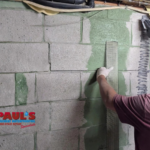
Good preparation makes or breaks the whole system. Crews clean the concrete surface and scrape off loose material. They fill every void, cold joint, and gap with hydraulic cement or an elastomeric sealant. This closes the small openings where water infiltration starts. A clean surface also helps the next layer adhere. Strong adhesion matters, because a coating that peels will let water pass through later.
Waterproof Membrane Options
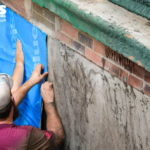
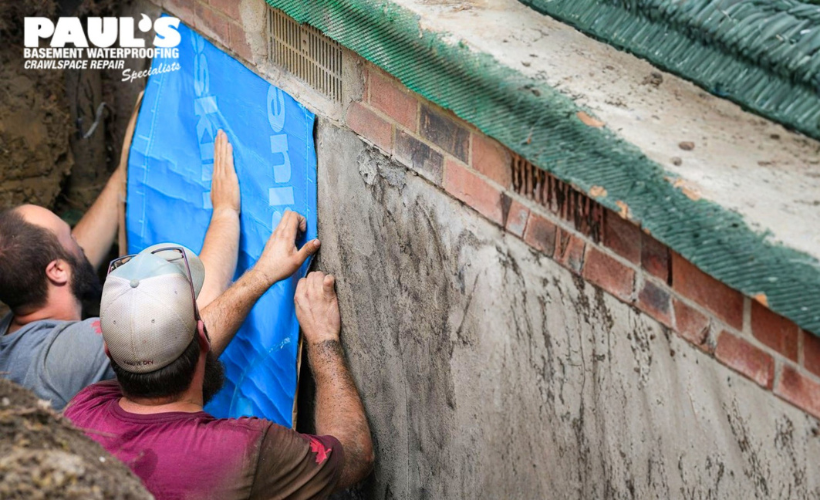
The waterproof membrane is the core of the system and the main barrier against water. Paul’s Basement Waterproofing applies a liquid membrane of polymer-modified rubberized asphalt, or a heavy-duty peel-and-stick sheet membrane. The liquid membrane pours on and self-levels into one smooth coat. The peel-and-stick sheet uses a strong adhesive backing instead. Both membrane materials wrap the wall without seams, so water finds no gap to slip through. This high-quality waterproofing material bridges hairline cracks and acts as a barrier against hydrostatic pressure, the steady push of groundwater on the wall. Membrane application controls the result, so crews keep the coat even and overlap every joint. A clean waterproofing application flexes as the clay soil swells and shrinks, which helps it hold its seal for years. Using a waterproofing membrane on the outside face gives the wall a full, flexible shield.
Dimpled Drainage Boards
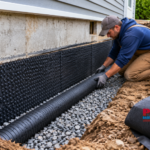
A dimpled drainage board goes on over the membrane and adds durability. The tough plastic shields the waterproof layer from backfill and sharp stones during refill. Its raised dimples leave an air gap against the wall. Any water that reaches this gap runs straight down to the drainage pipe instead of pressing on the concrete. This simple design helps prevent water from seeping through under pressure, and it adds a second line of waterproofing protection.
Footing Drains and Weeping Tile
A footing drain gathers groundwater at the base of the foundation. Crews lay perforated pipe, cover it with washed stone, and wrap the whole run in filter fabric so soil cannot clog it. This method is often used for foundations in areas prone to heavy rainfall, like Windsor-Essex. Many older local homes still rely on original clay weeping tile. That old tile cracks and blocks with age, so replacing it with a modern perforated system restores drainage and stops repeat flooding.
Interior Moisture Management
Interior systems handle water that already reached the inside of the foundation. This approach controls water intrusion when excavation is not possible, and it backs up an exterior system. Interior methods do not block the intrusion at the wall. Instead, they catch the water and send it to a pump before it spreads across the floor.
An interior drainage channel runs below the basement floor along the footing. It collects the water and feeds it to a sealed sump pit. A sump pump then lifts the water out and away from the house. Paul’s Basement Waterproofing also adds a vapor barrier on the inside face to prevent moisture from reaching finished rooms. The same method works on concrete block walls, not just poured walls. A battery backup pump keeps the system running during storms, since heavy rain and power cuts often arrive together.
Sealers and Coatings for Low-Pressure Areas
Penetrating sealers suit foundations that face damp but no standing water. These waterproofing products soak into the concrete pores and react to form a water-repellent layer. Silane and siloxane sealers repel water without changing how the concrete looks. Cementitious waterproofing is another choice for interior surfaces, because it bonds to concrete and blocks damp. Each type of waterproofing has its place, and the right waterproofing solution depends on where the water comes from. These waterproofing options work best as one part of a full drainage plan, not as a stand-alone fix. Some exterior assemblies add rigid insulation over the membrane for comfort, though it does not replace drainage.
Site Drainage: The First Line of Defense
Waterproofing fails when water pools against the house. Good site drainage carries rain and snow melt away from the foundation before it can build pressure. Two simple steps do most of the work:
- Grading: Slope the soil away from the foundation so the ground drops at least 15 centimetres over the first 3 metres. This gradient sends surface water toward the yard instead of the wall.
- Gutters and downspouts: Keep gutters clear and extend each downspout at least 1.5 to 3 metres from the home. This drops roof runoff well past the foundation zone.
These simple and effective steps cut the water that ever reaches the waterproofing layers. They cost little, and they protect every other system you install.
Choosing the Right Method for Windsor-Essex Homes
Local ground conditions decide which waterproofing methods fit your home. Windsor, Essex County, and Chatham-Kent sit on heavy clay soil. Clay holds water and swells after rain, which raises pressure on the wall. In dry spells it shrinks and pulls back from the concrete. This constant movement opens cracks. Left alone, those cracks lead to structural foundation damage and costly repairs.
Waterproofing concrete takes a plan, not a single product. Different waterproofing choices suit different homes, so here is how the main options compare. An exterior system with membrane waterproofing gives the most effective waterproofing for homes with repeat leaks. Interior wall waterproofing is the practical answer when decks, patios, or property lines block excavation. Whatever you choose, the product should be designed for concrete and should suit local environmental conditions and the type of structure.
Good local waterproofing contractors also follow the local building code, because building materials and methods have to meet local rules. A complete system protects concrete structures of every age, guards your home from water damage, and delivers long-term durability. Windsor homeowners who deal with repeat flooding may also qualify for the City of Windsor Basement Flooding Protection Subsidy Program, which helps fund protective upgrades.
A proper assessment matches the method to the cause. Paul’s Basement Waterproofing inspects the foundation, finds the water source, and recommends the exact system your home needs. This family-owned team brings years of local experience, so you get advice you can trust.
Protect Your Foundation with Local Experts
The right waterproofing techniques for concrete foundations depend on your soil, your water table, and the age of your home. Paul’s Basement Waterproofing serves homeowners across Windsor, Essex County, and Chatham-Kent with exterior systems, interior drainage, foundation crack repair, and sump pump installation built for local clay soil.

Call Paul’s Basement Waterproofing today to book a foundation assessment and get a clear plan that keeps your basement dry for years to come.