Cinder block foundation repair corrects the foundation issues most common in older Windsor and Essex County homes. A block wall handles the downward weight of a house well but resists sideways soil pressure poorly. The mortar joints between blocks form horizontal seams, and those seams are the weak line. When wet soil pushes against your home’s foundation, cracking and bowing follow those joints. Left alone, block foundation problems travel into the framing above and threaten the structural integrity of your home. Paul’s Basement Waterproofing inspects, stabilizes, and waterproofs block walls across Windsor, Kingsville, Leamington, Essex, Lakeshore, Amherstburg, LaSalle, and Chatham-Kent.
Causes of Foundation Damage in Block Walls
A block wall is a stack of hollow concrete units held together by mortar. Filling those cores with grout and steel rebar adds strength, but most homes built here before 1960 skipped that step. That type of foundation relies on mortar joints alone, and they were never meant to resist heavy sideways force. Those walls held up for decades, but shifting soil moisture, aging drainage, and repeated freeze cycles weaken the foundation over time.
Hydrostatic Pressure and Poor Drainage
Water in soil has weight, and that weight creates hydrostatic pressure. Picture soil pushing on your wall the way water pushes on a full bathtub. After heavy rain or fast snowmelt, saturated ground presses hard against the wall. Poor drainage around the foundation holds that pressure in place. Homes near Lake Erie sit above a high water table, so pressure stays high through wet months. The result is water damage inside and visible signs of block foundation trouble outside.
Clay Soil and Foundation Settlement
Windsor-Essex sits on heavy clay left by ancient lake beds. Clay swells when it takes on water and shrinks when it dries. A wet spring drives soil hard against the wall. A dry August pulls it back, leaving a gap that fills with the next rainfall. Freeze-thaw cycles from November through March add a third force as trapped water expands. When the ground under the footing gives way unevenly, one section sinks faster and foundation settlement begins.
Failing Weeping Tile
Many local properties still drain through original clay weeping tile. Those short sections shift, silt up, and crack as tree roots find the joints. Once that drain stops working, groundwater collects at the footing, foundation settling speeds up, and foundation movement passes into the block courses above.
Common causes of block foundation issues include:
- Hydrostatic pressure from saturated soil loading the outside wall face
- Expansive clay soil swelling and shrinking with seasonal moisture change
- Failed weeping tile letting groundwater pool against the footing
- Surface water from flat grading and short downspout discharge
- Missing reinforcement in walls built without grouted cores or rebar
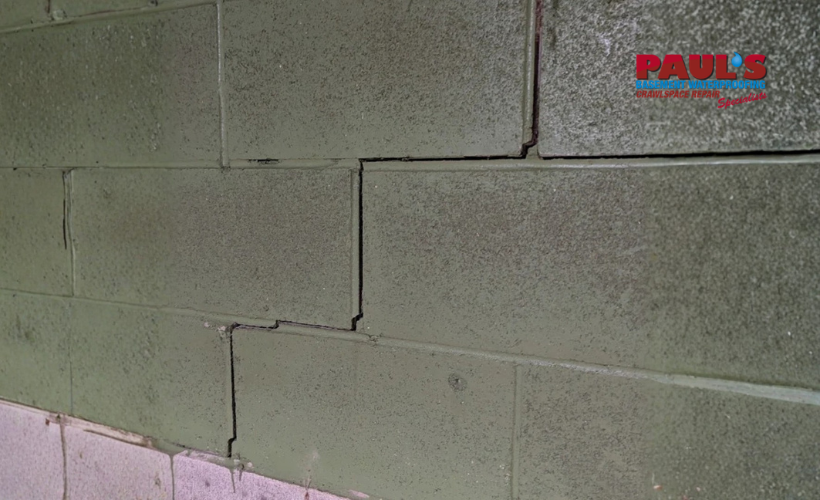
Warning Signs of Foundation Issues
Block walls give clear notice before they fail, and the crack pattern tells an inspector which force is at work.
Reading Foundation Cracks
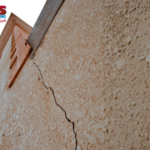
The first sign of foundation trouble is usually cracking along the mortar, not through the block. Diagonal cracks stepping down from a corner point toward settlement. Horizontal foundation wall cracks near mid-height are the most serious. That type of crack means sideways pressure has beaten the joint.
Hairline cracks inside a single block are often cosmetic. Hairline cracks that lengthen each season point to an underlying foundation problem. Small cracks widen every wet season, and minor cracks become structural issues once the wall leans.
Cracks may also appear as vertical separation where two walls pull apart under uneven load. Mark the ends of any cracks in block work with a pencil and date them. Cracks that move between checks need review.
Movement and Moisture
A bowing foundation has already lost strength. Hold a straightedge against the basement wall to see how far it has moved. Moisture appears alongside the cracking, because the same water creating the pressure travels through the joints. Doors and windows that stick upstairs mean the movement has reached the framing, and you face serious structural damage rather than a small repair.
Common signs of foundation damage include:
- Stair-step and diagonal cracking through mortar joints
- Horizontal cracks at mid-wall height
- Visible inward bowing of the wall or crawl space perimeter
- Damp patches, seepage, or white mineral deposits called efflorescence
- Musty odour or mould growth on the block surface
- Doors and windows on upper floors sticking or failing to latch
Early signs are far simpler to correct than serious foundation problems found after the wall shifts.
Foundation Repair Solutions That Match the Problem
No single repair method fixes every wall. The right choice depends on how far the wall has moved, what pushed it, and whether the water source is controlled. Foundation repair companies that brace a wall and stop there leave the original force in place, so the damage returns. Paul’s basement waterproofing provides permanent waterproofing solutions.
Carbon Fibre and Aramid Reinforcement
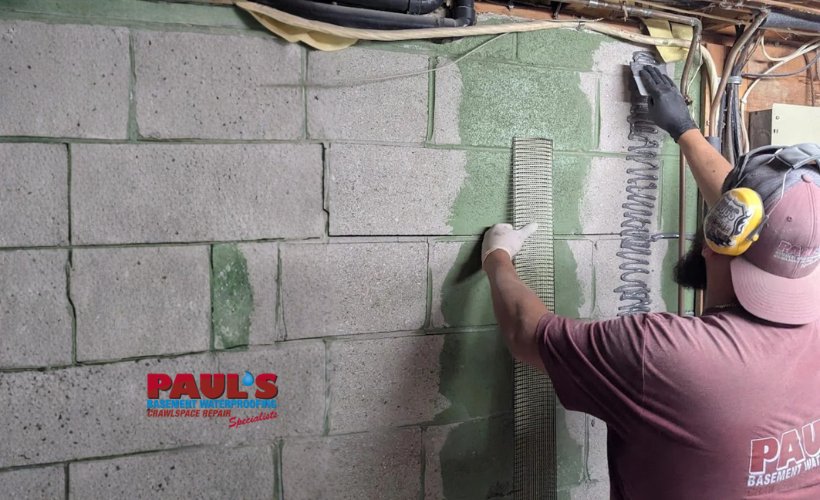
Carbon fibre straps bond to the inside face of the wall with structural epoxy. The strap holds the wall in tension and stops further inward movement on walls that have moved less than roughly 5 centimetres. Straps sit flat against the block, so the basement stays usable. Aramid fibre systems work the same way, with added flexibility for walls that shift sideways too. This is the most common foundation repair for mildly bowed block.
Steel I-Beam Bracing
Walls that have moved further need steel. Vertical I-beams anchor into the basement slab and tie into the floor joists above, carrying the soil load into the frame of the house instead of the block. That foundation support stops active movement, and the beams can often be tightened over several seasons to draw the wall back.
Wall Anchors
An anchor system sets a steel plate in firm soil away from the house and connects it to a matching plate inside using a threaded rod. Tightening the rod pulls the wall back toward its original position. This method needs clear ground beside the affected wall.
Helical Piers for Settlement
When the footing itself has sunk, bracing the wall alone will not repair foundation walls for good. Helical piers, also called helical piles, are steel shafts with plates that screw past soft soil into a firmer layer. They carry the weight of your home onto it. Foundation piers hold the footing at a fixed elevation and stop the settling cycle that keeps reopening cracks in your foundation. A pier system can also brace an existing foundation during exterior excavation.
Crack Repair and Waterproofing
Structural work stops the movement. Water control removes the cause. A lasting fix must address foundation damage on both fronts.
Interior Water Control
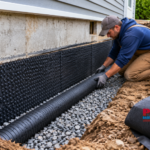
Repointing, which means cutting out failed mortar and packing in new, restores the bond between blocks. Injection sealing fills active leak paths. Interior weeping tile at the footing collects groundwater and carries it to a sump pump, which moves it away from the house. Together these steps help prevent future water damage in the basement and crawl space.
Exterior Water Control
Exterior excavation and a waterproof membrane give water a path down the outside of the wall. Regrading so soil slopes away moves surface water off the foundation wall. Extending downspouts at least 1.8 metres cuts the load before it reaches the soil. Windsor homeowners can also review the City of Windsor Basement Flooding Protection Subsidy Program, which supports qualifying drainage and backwater valve work.
What a Foundation Inspection Covers
An accurate diagnosis prevents wasted work. Repair experts follow the same sequence every visit:
- Measure how far the wall has moved and mark reference points
- Record crack width, direction, and location
- Check grading, downspout discharge, and drainage
- Test the sump system and locate the weeping tile discharge
- Assess interior moisture, efflorescence, and mould evidence
- Recommend a stabilization method plus a water control plan
Protect Your Home With Expert Foundation Repair
Cracked or bowing block rarely settles on its own. Every wet season adds pressure and every freeze cycle widens the joints. Cinder block foundation repair done early preserves more of the original wall and protects your property value.

Paul’s Basement Waterproofing is a local foundation repair company with decades of experience in Windsor-Essex clay, aging weeping tile, and the block foundations found across Essex County and Chatham-Kent. Call 1-877-322-2260 to book an assessment. From the ground down, Paul’s Basement Waterproofing keeps your basement dry and your foundation sound.