A bedroom door that closed fine in spring now scrapes the frame in August. A crack above a window keeps getting longer. These small changes can be the first signs of a Sinking Foundation, and they are easy to ignore until the damage spreads. Paul’s Basement Waterproofing inspects foundations across Windsor-Essex and Chatham-Kent. This guide explains the causes, warning signs, and repair options.
What Causes a Sinking Foundation in Windsor-Essex Homes
A foundation sinks when the soil beneath it can no longer support the weight of your home evenly. When one corner starts to sink faster than the rest, the house settles unevenly and shifts out of line. That is why our assessment checks the drainage and soil conditions around your foundation as well as the concrete.
Clay Soil That Shrinks and Swells
Our team looks for clay soil that expands and contracts as soil moisture changes. If the soil under one side of a home dries out faster, that soil movement can let that side settle lower. An on-site inspection shows our team what sits beneath your home’s foundation. For regional geology maps, contact the Ontario Geological Survey.
Groundwater and Lake Proximity
Groundwater levels and nearby lakes can affect how wet the soil stays around a foundation. Soil that stays soaked may not carry weight as evenly as dry, firm soil. Contact your local conservation authority to ask about groundwater and flood-prone areas near your home.
Older Homes, Freeze-Thaw Cycles, and Drainage
Older homes may have foundations built with earlier methods. Repeated freezing and thawing in winter can also move soil that holds water. Check these drainage points around your house:
- Downspouts that empty right beside the walls
- Ground that slopes toward the house
- Loose fill soil placed against the walls after construction
- Tree roots growing near the footings
Check your municipal bylaws before you change downspouts or regrade your yard.
Warning Signs of a Sinking Foundation
Key indicators that suggest your foundation may be sinking can show up outside, inside, and in the basement. Any one sign can also point to a different foundation issue. Treat each one as a reason to book a professional inspection, not as a diagnosis.
Exterior Signs
Walk around your home and look for these common signs of foundation problems:
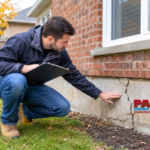
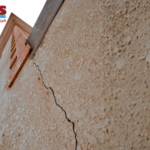
- Stair-step cracks that follow the mortar lines in brick or block walls
- A chimney that leans or pulls away from the house
- Gaps around doors and windows, where the brick meets the trim
Interior Signs
Inside, watch for sticking doors and windows that rub at the top or will not latch. This can mean the frame around them has twisted out of square. Diagonal cracks that start at the top corners of door and window frames are another sign. Baseboards may also pull away from uneven floors and leave a gap.
The Marble Test for Sloping Floors
If a floor starts to feel uneven, place a marble on it in a few spots. If it rolls toward the same wall each time, the floor slopes. A slope alone does not indicate that your foundation is still moving. Note where it happens and mention it during your inspection.
Basement Signs
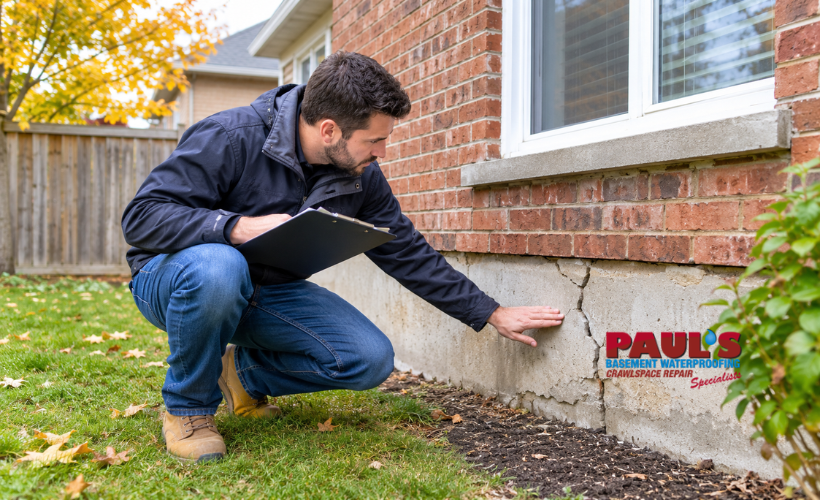
In the basement, look for foundation cracks that are wider at one end than the other. Check whether any rows of concrete block have slid out of line. Watch for new cracks appearing with water or white mineral stains around them. Horizontal cracks and foundation walls that bow inward need a different kind of assessment. See our guides to bowing basement wall repair and cinder block foundation repair.
Crawl Space Signs
In homes with crawl spaces, changes below the floor can also signal a sinking foundation. Look for support posts that have dropped, beams or floor joists that sag, and damp or stained insulation. Our crawl space repair team checks these areas and replaces or reinforces rotten beams and piers.

Settling vs. Sinking: When to Call for an Assessment
Many people hear that houses settle over time, so a hairline crack can seem harmless. One crack does not tell the whole story about foundation settling. Conducting regular inspections of your own walls can help you catch foundation problems early. Use this routine:
- Mark both ends of the crack with a pencil and write the date beside each mark.
- Hold a ruler across the crack and take a photo.
- Take a new photo on the same day each month.
- Note any doors or windows that start to stick.
Call for an assessment if a crack grows past your pencil marks, if one side sits higher than the other, or if a patched crack opens again. During a visit from Paul’s Basement Waterproofing, our team inspects the whole house, then explains what we found and which repairs we recommend. For questions about the structural integrity of your home, you can also ask a Professional Engineer to review the foundation.
What Happens If a Sinking Foundation Is Left Alone
Left unaddressed, ongoing foundation movement may add to foundation damage over time. A Professional Engineer can tell you whether it points to a serious structural problem. Cracks that keep opening can let in more water. If basement moisture raises mould concerns, check Health Canada’s guidance. Doors, windows, and drywall may need repeated repairs down the road. If you plan to sell, ask your real estate lawyer whether you need to disclose foundation problems or repairs.
How a Sinking Foundation Is Repaired
Repairing a sinking foundation starts with an inspection from our team. We look for the root cause of the movement. A fix that ignores wet soil or poor drainage can leave the problem in place. Most of our plans for sinking foundations have two goals: stabilizing the foundation and managing the water around it. Ask your municipal building department whether your repair needs a permit, and confirm with your contractor who applies for it. Our foundation repair services and structural foundation repair pages list all the work we do.
Helical Piles and Underpinning
Helical piles, also called helical piers or foundation piers, are steel shafts with screw-shaped plates. Our crew turns them into the ground beneath the footing, the concrete base that the walls rest on. Paul’s Basement Waterproofing installs helical piles for foundation support under settling sections and new home additions. Once the piles are in place, our crew can raise, level, or stabilize the foundation, depending on what the assessment shows. Underpinning adds support beneath an existing footing. See our guide to how basement underpinning works. Ask how many piers your home needs, how deep they will go, and whether your project includes engineered design.
Carbon Fibre and Aramid Fibre Wall Reinforcement
Some homes have walls that bow inward instead of settling. For these walls, our team bonds carbon fibre or aramid fibre straps to the inside face of the wall. We do not use straps for settlement, so we confirm the cause first.
Crack Repair and Exterior Drainage
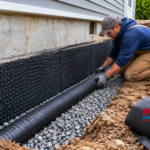
Water can be part of the problem, so drainage can be part of the fix. Our exterior foundation work includes digging along the walls, sealing structural cracks, applying a waterproofing membrane, and installing new weeping tile connected to a sump pump. Our crack repair service can also seal cracks from inside the basement. Ask your municipal building department about any rules for sump pump discharge.
Comparing Repair Options
| Repair | What our team uses it for | Where the work happens |
|---|---|---|
| Helical piles and underpinning | Supporting settling sections of foundation and new additions | Beneath the footing |
| Carbon fibre and aramid fibre straps | Reinforcing walls with horizontal cracks that bow inward | Inside basement walls |
| Crack repair and exterior drainage | Sealing cracks and moving water away from the foundation | Outside digging and inside walls |
Book a Foundation Assessment with Paul’s Basement Waterproofing
If you think your foundation is sinking, book a closer look before the next season of wet soil and frost. Paul’s Basement Waterproofing is a family-owned company based in Kingsville. We offer professional foundation repair to homeowners across Essex County and Chatham-Kent, including:
- Windsor, LaSalle, and Amherstburg
- Kingsville, Leamington, Essex, and Lakeshore
- Chatham, Wallaceburg, Ridgetown, Blenheim, and Dresden

Call 1-877-322-2260 to book your foundation assessment, the first step to protect your home. Our team will inspect your home, explain what we find, and walk you through repair options for your Sinking Foundation.