Basement underpinning provided by Paul’s Basement Waterproofing company in Windsor-Essex On… is the process of lowering and strengthening your home’s foundation by excavating below the current footings and pouring new concrete in small, controlled sections. The result is a deeper, stronger base that adds 2 to 4 feet of ceiling height and helps expand your living space without building an addition. Windsor and Essex County homeowners face a specific risk from heavy clay soil that swells and shrinks seasonally, accelerating foundation settlement. This guide explains how basement underpinning works, which method suits your home, and why pairing it with basement waterproofing protects your investment.
What Is Basement Underpinning?
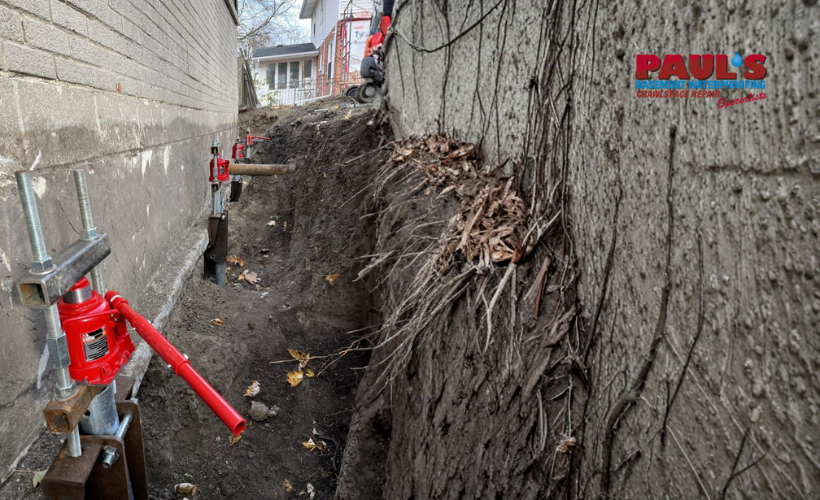
Basement underpinning involves extending your home’s original foundation downward to reach more stable soil. Workers excavate beneath the existing footings in small sections, typically 3 to 4 feet wide. They fill each one with reinforced concrete to build a new, lower foundation layer. Because only one section is open at a time, the home stays supported and safe throughout.
Traditional basements in older homes were built with ceilings of just 5 to 6 feet enough for storage space, but not comfortable living. A low basement limits how that area of a home can be used and reduces overall property value. Underpinning changes that by giving homeowners the ceiling height needed to create a legal basement apartment, generate rental income, or add extra living space without expanding the footprint.
Signs Your Foundation May Need Underpinning
Some foundation problems develop slowly. These warning signs indicate your home may need foundation repair or underpinning before structural damage gets worse.
- Horizontal or stair-step cracks in concrete or block foundation walls
- Floors above the basement that feel uneven or slope to one side
- Doors and windows that stick, drag, or no longer close properly
- Gaps opening between walls and the floor or ceiling
- Foundation issues linked to shifting clay soil beneath the footings
- A crawl space or basement with recurring moisture or water intrusion
Windsor-Essex clay soil expands when wet and shrinks when dry, placing ongoing stress on foundation walls. A licensed structural engineer should inspect your foundation before underpinning begins.
3 Methods of Basement Underpinning
Your type of foundation, soil conditions, and goals all determine the right method.
Traditional Mass Concrete Underpinning
This is the most widely used method for Ontario homes. Workers dig small pits beneath the existing footing one at a time. Steel reinforcement goes in, and concrete is poured to form a new, deeper footing that helps support the load. A 50mm to 75mm gap is left between the new concrete and the underside of the old footing. Once cured, that gap is filled with dry-pack grout, a firm sand and cement mix that locks the new footing tightly in place. The process repeats in a staggered sequence around the perimeter until the full foundation reaches the new depth.
Bench Footing Method
Benching pours a new concrete footing beside the existing one rather than below it. This is faster and more affordable because it avoids deep excavation in weak or unstable soil. The trade-off is floor area — the new bench creates a raised ledge along the inside perimeter, reducing the total usable square footage. Benching works when the goal is ceiling height, but it is not the right choice when correcting active foundation issues or structural failure.
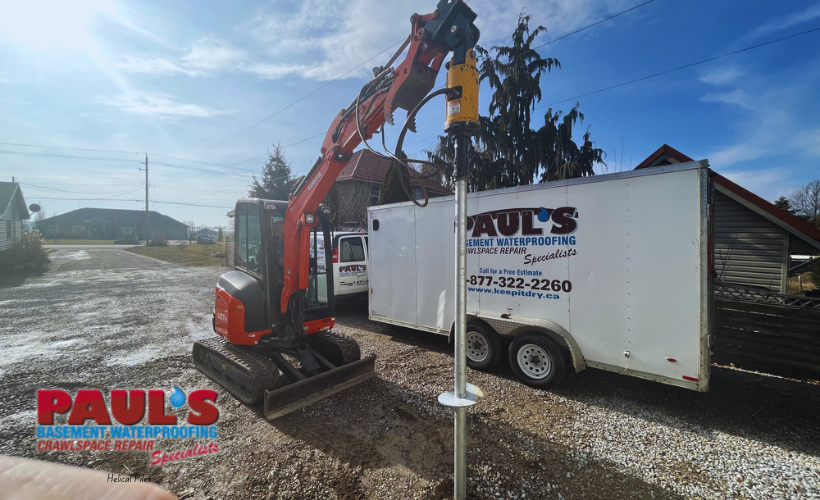
Helical Piles
When soil conditions are too poor to support traditional concrete underpinning, helical piles offer a more direct solution. These steel shafts are screwed deep into stable soil and anchored directly to the footing, halting active settlement without large-scale excavation. Paul’s Basement Waterproofing installs helical piles as part of a complete structural repair strategy for Windsor-Essex homes where severe clay soil movement has compromised the foundation.
The Underpinning Process: Step by Step
Every basement underpinning project follows the same sequence of steps to keep the home safe and structurally sound throughout.
- Engineering and Permits: A structural engineer inspects the foundation and produces stamped drawings. This foundation work requires a building permit under Ontario building code requirements, and no reputable contractor begins without approved plans.
- Site Preparation:The basement is cleared of furniture, ductwork, and framing. Temporary support beams are added where needed to keep the structure stable during excavation.
- Section Marking: Foundation walls are divided into 3- to 4-foot sections and numbered. Workers open one section at a time in a staggered order, so the foundation is never unsupported across adjacent areas.
- Excavation: Each pit is dug to the engineer’s specified depth. The floor of the basement is broken up in these staged sections, typically reaching about 1 metre from the wall.
- Concrete Pouring: Steel rebar is placed in the pit and concrete is poured to form the new, deeper footing.
- Dry Packing: Once the concrete cures, workers fill the remaining gap with dry-pack grout, creating a solid load-bearing bond between the new and old footings.
- Floor and Drainage Work: With all wall sections complete, the remaining interior soil is removed. A new concrete floor is poured, and drainage systems, sump pumps, and plumbing are installed.
Most residential projects in Windsor-Essex Onatrio take 12 to 16 weeks, depending on home size and soil conditions.
Why Windsor-Essex Clay Soil Makes Underpinning More Common Here
Essex County and Chatham-Kent sit on dense clay soil that reacts very differently to moisture than the sand or gravel found elsewhere in Ontario. When it rains, clay swells. In dry summers, it contracts. This movement shifts foundation walls, opens cracks, and causes structural damage that worsens with every season. Older Windsor homes built directly on clay many without proper drainage or weeping tile are particularly vulnerable. It is one reason foundation repair, helical pile installation, and basement underpinning are in higher demand here than in most other Ontario regions.
Combining Underpinning with Basement Waterproofing
When the floor of the basement is already broken up and the perimeter walls are fully exposed, adding a waterproofing system at the same time is the smarter financial choice. Installing a French drain, weeping tile, or sump pump during underpinning costs far less than scheduling a separate job and breaking up a finished concrete floor later. Homes with a crawl space can address moisture problems during the same project window.
Paul’s Basement Waterproofing recommends combining both services for Windsor-Essex homeowners planning underpinning work. The advantages are practical and immediate:
- Drainage pipes go in while the perimeter is fully open and accessible
- The sump pump and discharge line are built into the floor pour
- The finished concrete slab never needs to be broken up again for future waterproofing
- Water pressure from clay soil is managed before it can stress the new foundation
A lowered basement that later develops a wet basement problem puts the entire investment at risk. Mold, structural damage, and lost property value can follow. Doing both at once eliminates that risk.
What Does Underpinning Cost in Ontario?
The cost of underpinning ranges from $80 to $350 per linear foot, based on the method, excavation depth, and home size. Total project costs generally run between $50,000 and $70,000, covering engineering, permits, excavation, concrete, dry-pack grouting, and slab replacement. Underpinning in Toronto homes tends to sit at the higher end of that range. Windsor-Essex homeowners typically get better value per square foot. For those looking to transform your basement into a finished living area or create a legal rental unit, underpinning is worth the investment.
Adding interior waterproofing during the same project runs approximately $10,000 to $15,000 — a fraction of what a separate, standalone project would cost once the floor is already poured.
Protect Your Home with a Foundation You Can Trust
Done correctly, basement underpinning strengthens your home’s structural base, adds livable space, and increases long-term property value. Done without proper permits and engineering, it can cause structural damage far more costly than the original project. Ontario building code requires a building permit and stamped engineering drawings for all underpinning services. Any contractor who suggests skipping those steps should not be trusted with your home.

Paul’s Basement Waterproofing serves homeowners across Windsor, Kingsville, Essex, Leamington, Amherstburg, LaSalle, Lakeshore, Chatham, and throughout Essex County and Chatham-Kent. The team provides immediate foundation assessments, honest estimates, and completes every basement underpinning project to full engineering specifications. If your ceiling is too low, your foundation shows signs of settlement, or you want to expand your living space without building an addition, contact Paul’s Basement Waterproofing today.